
Tooth Extractions - Old Bridge, NJ Dentist
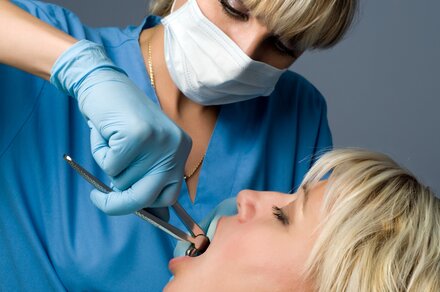
At Empire Dental Group of New Jersey, we make every extraction experience as comfortable and stress-free as possible. Dr. Pavlushkin performs most extractions right here in our Old Bridge dental office using the latest technology and gentle techniques to ensure optimal healing and minimal discomfort. Our compassionate team focuses on patient comfort from start to finish, from explaining every step of the procedure to offering personalized aftercare instructions.
What is a tooth extraction?
A tooth extraction is a dental procedure in which a tooth is removed from its socket in the jawbone.
Dr. Pavlushkin may recommend extractions for several reasons, including:
- Severe decay or damage that cannot be repaired with a filling or crown.
- Infection that has spread to the pulp and can’t be treated with root canal therapy.
- Impacted teeth, especially wisdom teeth that don’t have enough room to come in properly.
- Periodontal (gum) disease, which can loosen the tooth’s supporting structures.
Understanding Tooth Extractions
There are two main types of dental extractions: simple extraction and surgical extraction.
Simple Extraction
Simple extractions are performed on teeth that are visible and easily accessible. Dr. Pavlushkin uses specialized instruments to loosen the tooth before gently removing it with forceps. This procedure is relatively straightforward and is often used for teeth that are decayed, damaged, or require removal for orthodontic reasons.
Surgical Extraction
Surgical extractions are necessary when a tooth cannot be easily accessed, such as when it has not fully erupted or has broken beneath the gum line. During a surgical extraction, Dr. Pavlushkin makes a small incision in the gum tissue to gain access to the tooth. In some cases, surrounding bone may need to be removed, or the tooth itself may need to be sectioned to facilitate its removal. This process ensures the safe and efficient extraction of the tooth while minimizing your discomfort.
The Tooth Extraction Process
The treatment procedure for a tooth extraction involves several important steps to ensure your comfort and safety.
1. Examination and Diagnosis
Dr. Pavlushkin will perform a clinical examination and review X-rays to evaluate the tooth’s position, roots, and surrounding bone. This helps determine whether it will be a simple extraction (tooth visible above the gum) or a surgical extraction (tooth broken, impacted, or below the gum line).
2. Anesthesia
Local anesthesia is administered to numb the area around the tooth, ensuring you do not feel any pain or discomfort during the procedure. If you experience dental anxiety or have a particularly complex case, sedation or general anesthesia may be used.
3. Tooth Loosening and Removal
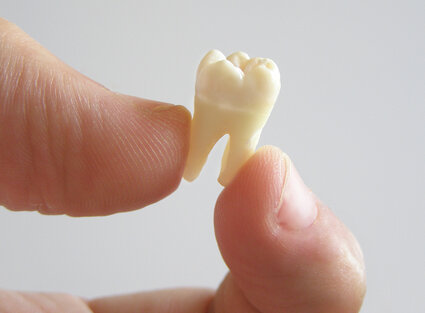
Dr. Pavlushkin will gently loosen the tooth from the socket. Then, she will use specialized dental tools to grasp and carefully remove the tooth from its socket. If you require a surgical extraction, a small incision in the gum or removal of a small amount of bone may be needed to access the tooth.
4. Cleaning and Socket Care
After removal, Dr. Pavlushkin will clean the socket to remove debris or infection. If necessary, stitches (sutures) are placed to help the gum heal properly.
Post-Extraction Care
Following your tooth extraction, proper post-operative care is essential for a smooth recovery. Our team will provide you with detailed instructions tailored to your specific needs, but some general guidelines include:
- Apply an ice pack to the affected area for the first eight hours (on for 20 minutes, off 20 minutes) to reduce swelling.
- Avoid consuming very hot or cold foods and beverages.
- Avoid foods that require strenuous chewing. Stick to soft foods and liquids to minimize discomfort and reduce the risk of damage to tender areas.
- Take any prescribed pain medication as directed but avoid overuse.
- If antibiotics are prescribed, ensure you take them regularly to prevent infection.
- A little bleeding or “oozing” may occur, especially on the first day. Gauze pads should be applied for a full 15 minutes. Contact Dr. Pavlushkin immediately if you experience excessive bleeding or any concerning symptoms.
Healing
Initial healing occurs in one to two weeks, with complete bone healing taking several months. You’ll return to our office in one to three weeks for a post-op checkup so Dr. Pavlushkin can monitor your healing process.
Follow-up visits may be scheduled to monitor healing or discuss replacement options like implants, bridges, or dentures.
At Empire Dental Group, we're committed to providing compassionate care and support throughout your dental journey. If you have any questions or concerns about tooth extractions or any other dental procedure, don't hesitate to reach out to our Old Bridge, NJ dental office.
Wisdom Tooth Removal

Wisdom teeth are the third and final set of molars to come in. They usually appear in someone’s late teens or early twenties. While there are some people whose wisdom teeth are healthy and won’t cause issues for their smile, most people will have to have their wisdom teeth extracted or they can become impacted, cause pain, or a number of other oral health issues. If a patient’s mouth is too small to make room for these molars, they could even grow in at an angle. This can ultimately cause damage to neighboring teeth.
It’s easier to remove wisdom teeth at a younger age when the roots of the wisdom teeth haven’t completely formed. The bone surrounding the teeth is softer then and there is less chance of damaging nerves. If you wait to have your wisdom teeth removed, complications may occur including fractured teeth, severe bleeding, and numbness.
Wisdom Tooth Extraction Process
Before your wisdom teeth are removed, Dr. Pavlushkin will administer a local anesthesia to numb the area. In some cases, sedation dentistry will also be used to help relax the patient during their procedure. Next, Dr. Pavlushkin will carefully make an incision in the gums and remove the bone that covers the wisdom tooth. Then, the tooth is typically cut into pieces to make it easier to remove. If the wisdom teeth have fully erupted, then only a simple extraction is required (in which the teeth are pulled using forceps). Once the teeth are removed, we will stitch up the gums and place a gauze pad over the area to stop bleeding. We will prescribe painkillers to take as needed for discomfort or pain.
The process for wisdom tooth removal is highly individualized depending on each patient’s particular case and needs. In some severe or more complicated cases, Dr. Pavlushkin may refer a patient out to an oral surgeon for wisdom tooth extraction services.